Civil process work puts you face-to-face with people on some of the worst days of their lives.
Evictions. Court orders. Notices that land hard and land suddenly.
Fear, anger, grief, confusion, desperation. These emotions are real, and they show up before logic ever has a chance. If you do this work long enough, you will see all of it.
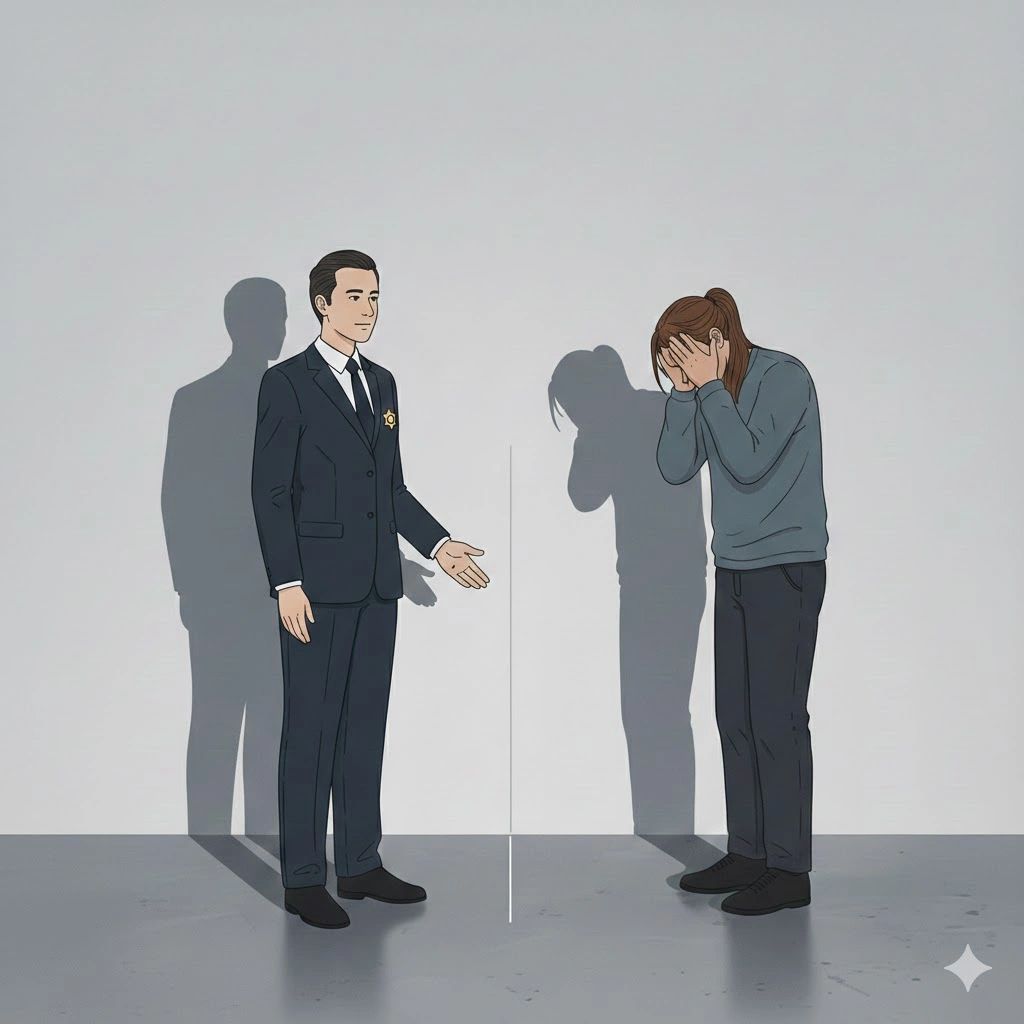
Professional distance is how you acknowledge that reality without becoming part of it.
What Professional Distance Is – and Is Not
Professional distance is often misunderstood.
It is not indifference. It is not coldness. It is not a lack of empathy.
Professional distance is the ability to care about outcomes without absorbing emotions that are not yours to carry.
You can recognize someone’s distress without trying to fix their life. You can listen without agreeing. You can be respectful without becoming emotionally entangled.
That balance is what allows the work to stay safe, ethical, and defensible.
Why Getting “Pulled In” Is Risky
When emotions are high, people look for anchors. Sometimes they look for allies. Sometimes they look for someone to blame.
If you allow yourself to be pulled into that emotional current, a few things happen quickly:
- Your neutrality becomes unclear
- Your authority feels personal instead of procedural
- Your words start reacting instead of guiding
- Your decisions feel heavier than they should
Once that line is crossed, professionalism erodes fast.
You stop being the calm presence in the room and start becoming another participant in the conflict.
That is not your role.
Caring Without Absorbing
Professional care looks like this:
- Listening without judgment
- Speaking calmly and clearly
- Explaining the process without editorializing
- Setting boundaries without apology
It does not look like:
- Arguing facts while someone is emotional
- Over-explaining to relieve discomfort
- Trying to convince someone to agree
- Carrying guilt that does not belong to you
You can care deeply about people and still refuse to carry emotions that are not yours to manage.
That refusal is not cruelty. It is discipline.
Distance Preserves Legitimacy
People in crisis are extremely sensitive to tone and posture. They can tell when someone is calm versus when someone is emotionally hooked.
When you maintain professional distance:
- You appear stable
- You appear legitimate
- You appear trustworthy, even when delivering bad news
When you get pulled in:
- Authority feels negotiable
- Boundaries feel inconsistent
- The situation feels personal
Professional distance protects the integrity of the process by keeping the focus where it belongs: on lawful outcomes, not emotional validation.
Distance Protects You, Too
This work accumulates. Without distance, it follows you home.
Carrying other people’s anger, grief, or desperation day after day leads to burnout, short tempers, poor judgment, and emotional exhaustion. None of those serve you, your office, or the people you interact with.
Professional distance is not just about the moment in front of you. It is about sustainability.
You cannot do this work well if every interaction leaves a mark.
The Balance Point
The goal is not to become hardened. The goal is to remain grounded.
You can say: “I understand this is difficult.”
Without saying: “I’ll try to change what I can’t.”
You can listen: Without fixing.
You can care: Without carrying.
That balance is where professionalism lives.
Why This Matters
Civil process is a public trust. People may not like the outcome, but they should never feel manipulated, dismissed, or emotionally toyed with.
Professional distance ensures:
- Neutrality is preserved
- Safety is maintained
- Authority remains legitimate
- Interactions stay defensible under scrutiny
This is not about being distant from people. It is about being close to the role.
The Bottom Line
Caring does not require emotional entanglement. Empathy does not require absorption. Professionalism does not require hardness.
Professional distance allows you to show up calm, steady, and ethical, even when the moment is heavy.
You can care. You can listen. And you can still remain exactly where you belong.
Solid. Grounded. Professional.